inquiry
Leave Your Message
0%

Looking ahead to 2026, it’s pretty clear that the world of precision positioning is changing fast. More and more industries are craving top-notch Gps Rtk Antennas, and companies like Trimble, Topcon, and Leica are constantly pushing the envelope with new tech to keep up. Their antennas deliver real-time data with crazy high accuracy—it's pretty impressive.

That said, not all GPS RTK antennas are created equal. Some might have shiny specs, but struggle when things get tough out in the field. It’s really important to think about stuff like durability and whether the equipment plays nicely with your existing setup—these factors can really make a difference in how well things perform. It’s common for folks to feel unsure about whether their gear will hold up or give reliable readings.

If you're a pro depending on precise measurements, investing in a good GPS RTK antenna really matters. But with so many options out there, figuring out which one is best can feel a bit overwhelming. Every model has its upsides and downsides, so it’s smart to think about your specific project needs before pulling the trigger. Taking the time to evaluate what truly matters can save you a lot of headaches down the line.

What are the Best GPS RTK Antennas in 2026?

Overview of GPS RTK Technology and Its Applications in 2026

GPS RTK technology has transformed precision positioning across various fields. In 2026, its applications span agriculture, construction, and surveying. The technology enhances accuracy significantly, often reaching within centimeters. Yet, the integration of Gps Rtk Antennas remains a challenge. Not all antennas perform equally in diverse conditions.

In precision agriculture, farmers rely on GPS RTK for efficient planting and crop monitoring. However, signal interruptions can lead to errors. Sometimes, users might not realize their GPS RTK antenna is underperforming. This oversight could result in costly mistakes. Similarly, construction sites benefit from real-time data, yet environmental factors often hinder performance. Locations with tall buildings or dense foliage may disrupt signals.

Each use case highlights the importance of selecting the right GPS RTK antenna. Many are tempted to choose based on price alone. While cost is a factor, the quality of the antenna is crucial. Users should consider compatibility and intended use. A well-chosen antenna can reduce errors significantly. But it's essential to evaluate not just the features but also the real-world performance in varying conditions.

Key Features to Consider When Choosing GPS RTK Antennas

When choosing GPS RTK antennas, several key features stand out. Accuracy is paramount. Most research indicates that high-end models can achieve centimeter-level precision. According to the latest industry reports, antennas built for dense urban environments often perform better due to advanced signal processing. They can mitigate multipath errors, which are common in such settings.

Durability is also essential. Many antenna designs include robust materials to withstand harsh weather. A report from the 2026 GPS Technology Summit highlights that antennas should be waterproof and resistant to corrosion for outdoor use. Portability is another factor. Lightweight and compact models are preferred for mobile operations. Users have indicated that weight impacts ease of transport significantly.

Power consumption is a notable aspect that affects performance. Antennas that consume less power while maintaining efficiency are gaining attention. Some models claim to extend battery life by 20%. However, this may come with a trade-off in signal strength. It's important to investigate how these antennas balance energy useand performance. Each of these elements contributes to the overall effectiveness of Gps Rtk Systems. Exploring user feedback can help identify potential shortcomings in various models.

Top GPS RTK Antenna Brands and Their Innovations in 2026

What are the Best GPS RTK Antennas in 2026?

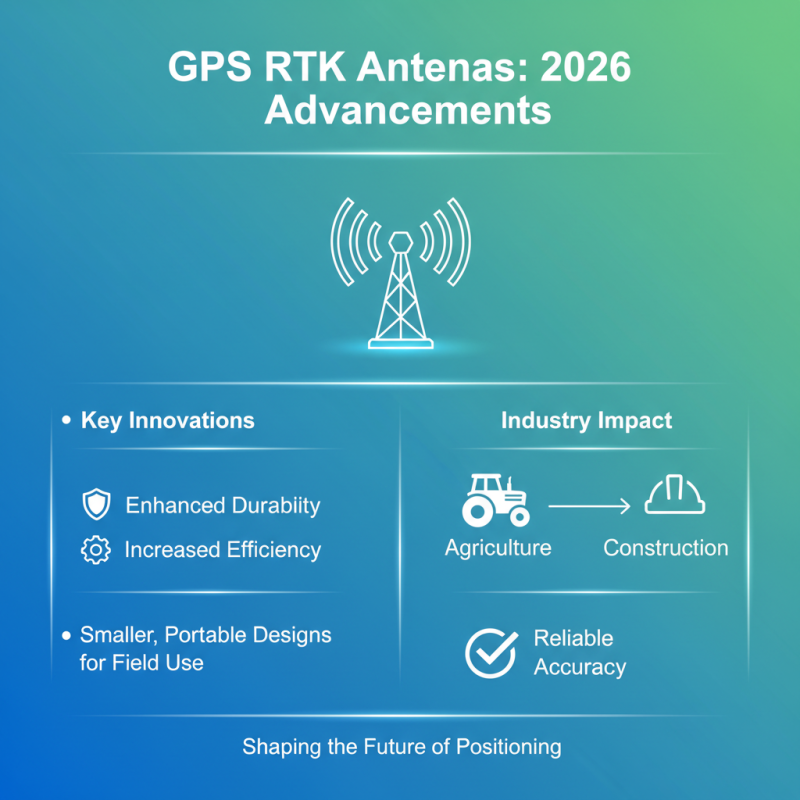
In 2026, GPS RTK antennas have advanced significantly. New designs feature enhanced durability and efficiency. These innovations are shaping various industries, from agriculture to construction. Users now demand reliable accuracy in their positioning tools. Smaller, more portable designs make them easier to use in the field.

Manufacturers are pushing limits with their innovations. Some antennas now incorporate multi-frequency capabilities. This allows for better performance in challenging environments. Users can expect improved signals, even in urban settings. However, not every new feature is beneficial. Users may find that complexity increases with advanced options. Adjustments and learning curves can be challenging.

Sustainability is another focus for brands. Eco-friendly materials are becoming standard in antennas. Despite these advances, challenges still remain. Battery life and their efficiency in harsh climates need more work. Continued improvements promise to shape the future of GPS RTK technology in exciting ways.

Comparison of Performance Metrics for Leading GPS RTK Antennas

The world of GPS RTK antennas is evolving rapidly. In 2026, performance metrics play a critical role in choosing the best antennas for Precise Positioning. Key metrics include accuracy, latency, and signal strength. According to industry reports, antennas achieving accuracy below 2 cm are becoming the standard. This marks a significant advancement compared to older models.

Field tests reveal that some antennas perform well in open areas but struggle in dense urban settings. The multipath effect can impact the signal, leading to inaccurate data. Some antennas communicate efficiently with a broad range of satellites, but their overall reliability may vary. Antennas that utilize advanced filtering technology exhibit improved performance in challenging environments.

Tip: Always conduct real-world tests before full deployment. This helps identify potential issues. Also, consider future proofing your choice. Antenna technology will continue to evolve. New protocols and signals may emerge, affecting current models. Stay informed about upcoming trends and changes in technology to ensure longevity in your investments.

User Reviews and Experiences with GPS RTK Antennas in 2026

In 2026, many users shared their experiences with GPS RTK antennas. They appreciate precision in measurements and quick setup times. Some reported challenges. Not all systems provide consistent accuracy. It’s crucial to select an antenna that suits specific needs.

Users noted that an Integrated Gps Antenna Rtk made a difference. These models often have fewer connectivity issues. They tend to be lightweight and easier to transport. This convenience is key during fieldwork. However, others faced difficulties in signal loss. Terrain can dramatically affect performance.

Tips for choosing the right antenna include checking user reviews. Many mentioned that customer support from manufacturers impacts their experiences. Look for models that are known for reliability. Testing different antennas in various environments can help identify the best fit. Overall, gathering feedback from fellow users provides valuable insights.

Future Trends in GPS RTK Antenna Technology and Development

In 2026, GPS RTK antennas will experience significant advancements. New materials and satellite technology will reshape their design. These innovations will enhance precision in various applications. For instance, construction sites may benefit from improved accuracy in positioning. Drones, farming, and surveying practices will also see positive impacts.

As we look at future trends, integration with IoT stands out. This will allow antennas to collect and share data in real time. Users will demand more seamless connections and better functionality. However, challenges remain. Not all regions have reliable satellite coverage. This limitation could hinder the effectiveness of advanced GNSS antennas.

Data security will become a pressing concern. As antennas gather more information, potential threats will arise. Balancing accessibility and protection is crucial. Developers must consider privacy while embracing technology. The evolution of Gnss Antenna Gps systems is promising, yet requires ongoing reflection and improvement.

Cost Analysis of Top GPS RTK Antennas and Budget Recommendations

When exploring the world of GPS RTK antennas in 2026, cost is a major factor. Many users are seeking quality without breaking the bank. It's essential to analyze the prices of various models. Some antennas can be quite pricey, while others provide more budget-friendly options. The key is to find a balance. Investing in a quality Gps Gnss Antenna can save money in the long run.

Budget recommendations vary widely. For example, entry-level models may start around a few hundred dollars. Higher-end antennas can cost thousands. Users should consider their specific needs carefully. Some professionals may require advanced features and accuracy.

Others may only need basic functionality for light tasks. Reflecting on personal requirements is crucial to avoid overspending on unnecessary features. Antenna performance doesn't always match the price. Often, affordable options perform surprisingly well. It's worth doing thorough research before making any decisions.

FAQS

: What is the main purpose of the product?

: The product aims to solve common daily challenges for users. It simplifies tasks and enhances convenience.

How do users typically use this product?

Users integrate it into their daily routines. It is designed for easy access and quick usage.

Are there specific guidelines for using this product?

Yes, there are recommended practices for optimal results. Following instructions can improve performance and safety.

What are some common issues users face?

Users may struggle with setup initially. Some features might be confusing without proper guidance.

Can anyone use this product?

While designed for a wide range of users, some may find it less intuitive. Experience levels vary.

What should users keep in mind while using it?

Users should be aware of potential limitations. Reflecting on individual needs can improve overall satisfaction.

How can users troubleshoot problems effectively?

Reviewing manuals can help, but users might need to experiment. Trial and error can lead to discovering solutions.

Is there customer support available?

Yes, support channels exist for assistance. However, response times may vary based on demand.

Are there any maintenance tips for longevity?

Regular cleaning and proper storage are crucial. Neglecting these may lead to performance decline over time.

What should users consider before purchasing?

Assess personal needs and usage frequency. Emotional and practical factors influence satisfaction levels.

Conclusion

In 2026, GPS RTK antennas play a crucial role in enhancing the accuracy and efficiency of positioning technologies across various applications, including agriculture, surveying, and construction. This article provides an overview of the advancements in GPS RTK technology, highlighting the key features to consider when selecting an antenna. Users can expect a comparison of performance metrics among leading models, along with insights from user reviews that emphasize real-world experiences.

Additionally, the article discusses emerging trends in GPS RTK antenna technology and further developments anticipated in the coming years. A cost analysis of the top GPS RTK antennas offers budget-friendly recommendations, ensuring that users can make informed decisions without compromising on quality. As the demand for precision increases, understanding these factors becomes essential for both professionals and enthusiasts in the field.

Isabella

Isabella

Isabella is a dedicated marketing professional at Shanghai Apekstool (APEKS), where her expertise in innovative geospatial surveying and mapping products shines. With a deep understanding of the company's core offerings, which include GNSS/GPS systems, total stations, levels, theodolites, and......
Previous Top 10 RTK Col Antenna Manufacturers from China at the 137th Canton Fair